08-09-2021 - Museum de Fundatie acquires Portrait of Bruno Alexander Roscher (1915) by Otto Dix
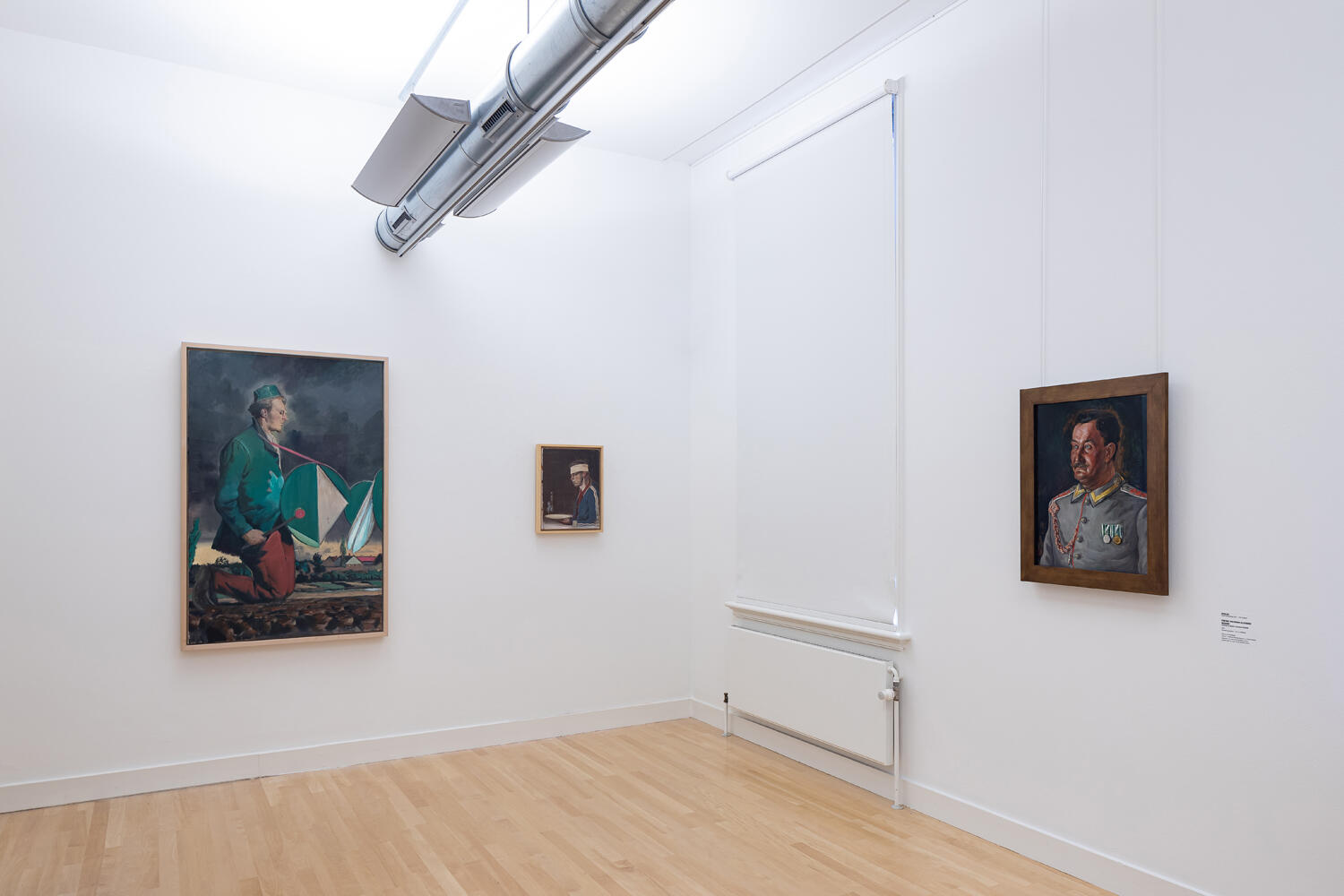
Museum de Fundatie recently acquired a painting by the important German painter Otto Dix at an auction in Berlin. It is an effigy of an officer, Bruno Alexander Roscher, from 1915 (oil on cardboard 67 x 50.5 cm). It is - as far as we know - the only painting by Otto Dix in a Dutch museum collection and was acquired with support from the Friends Lottery.
Otto Dix (1891, Gera-Untermhaus - 1969, Singen) is considered one of the leading German painters of the first half of the 20th century. He became best known for his unmercifully direct depiction of the battlefield of World War I and of life in the Weimar Republic with its birds of paradise, prominent figures and prostitutes. Otto Dix was also briefly a member of Berlin Dada. In the 1930s, his art was declared Entartet by the German Nazi government, upon which Dix retreated to the countryside near Lake Constance. After the war, Otto Dix was again embraced and celebrated in both the Federal Republic and the GDR. His work has been included in important museum collections around the world, such as those at MOMA in New York, the Centre de Pompidou in Paris and the Nationalgalerie in Berlin.
Otto Dix received a classical education at the Art Academy in Dresden, where Albrecht Dürer was considered the great role model. Initially, Dix painted with the same level of detail, until he was taken by Van Gogh's expressionism and his style became rougher and more direct. During the same period, World War I broke out and Dix volunteered for the front. He was trained as a gunner and machine gunner in a regiment in Dresden. There he met instructional officer Bruno Alexander Roscher, whose portrait he painted in 1915 in exchange for three days off. This painting was owned by the Roscher family for decades, without being known outside their circle. That changed when they reported to Nationalgalerie Berlin in 1991, during preparations for a major Dix retrospective as part of his 100th birthday, there. The painting was first published in the catalogue that accompanied this exhibition.
Portrait of Bruno Roscher Alexander shows Otto Dix's great powers of observation, firm sense of caricature and gossamer technique. Its realist character makes the portrait atypical of this expressionist period of Dix's, although it is visible in the rugged background and nimbus. Thanks to the convincing, sardonic depiction of the person portrayed, the work can be seen as an introduction to the psychologising, cartoonish work with which Dix won so much praise in the 1920s and 1930s. The painting is a fantastic prelude to the world-famous Dixian portrait gallery of Heinrich George, Sylvia von Harden and Anita Berber.
In Museum de Fundatie, the Portrait of Bruno Alexander Roscher is shown in conjunction with the work of Dix's Berlin Dada companions George Grosz, John Heartfield and Paul Lemon, and in close proximity to Franz Marc, Marc Chagall and Neo Rauch.
