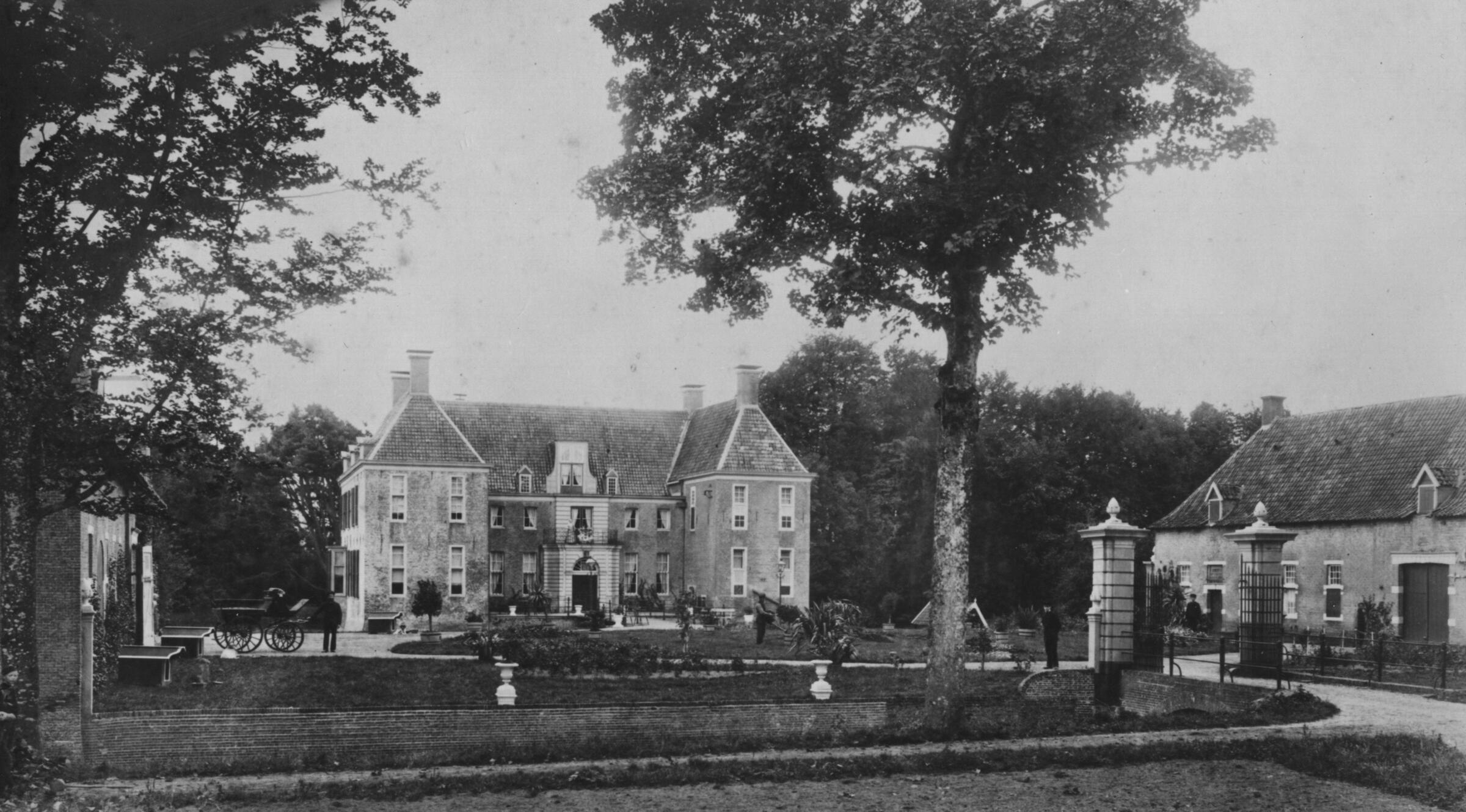
Kasteel het Nijenhuis is one of the best-preserved historic manor houses in Overijssel. It has a rich history. What is the story behind this remarkable building?
A historic manor house
A havezate was a fortified or substantial country house. For noble families, owning an officially recognised havezate could provide access to the Ridderschap, the assembly of nobles. This group had considerable influence on the government of Overijssel.
The history of Het Nijenhuis goes back a long way. The first mention dates from 1382. The oldest part of the present building probably dates from the 15th century. Old images even show the year 1438. This may refer to the year in which the house was founded. We cannot be completely sure, but it does show how old the history of this place is.
Noble families
For centuries, Het Nijenhuis was home to noble families. The Van Ittersum, Bentinck and Von Knobelsdorff families, among others, were connected to the house. They played an important role in Salland and Overijssel.
One of its residents, Robert van Ittersum, joined the revolt against Spain around 1580. At the time, this was a dangerous choice. After a lost battle near Goor, he was imprisoned for three years. Later, however, his family gained considerable power in Overijssel. A later Robert van Ittersum even became drost of Salland, one of the highest administrative positions in the region.
From formal to romantic
Over the centuries, Het Nijenhuis was altered and extended several times. From the front, the building looks calm and symmetrical. But this is partly the result of clever design. During a renovation at the end of the 17th century, efforts were made to make the façade look as orderly as possible. Some windows were made partly blind to hide differences in the structure. If you look closely, you can still see that Het Nijenhuis consists of many different building phases.
From 1687 onwards, Robert van Ittersum and Eleonora Sophia Bentinck had the house and park adapted to the taste of their time. Het Nijenhuis increasingly took on the appearance of a grand country estate. Straight avenues, moats, coach houses around the forecourt and a long stretch of water behind the house were added. In this way, the family showed its wealth, status and influence.
Around 1800, the park changed again. Part of the formal garden was redesigned in the English landscape style. This meant fewer straight lines and more winding paths, differences in height and water features. The park was intended to feel more natural and romantic: a place to walk, look around and dream.
At the end of the 19th century, Het Nijenhuis began to look even more like a castle. In 1896, two towers were added at the rear, on the south side of the house: an octagonal tower and a square tower. As a result, the house came to resemble the kind of castle many people imagine today. The building was already centuries old, but only then did it gain its recognisable castle-like appearance.
A place for art
In 1934, the Van Pallandt family sold the estate. A difficult period followed. The building fell into disrepair and no longer had a clear future. This changed thanks to Dirk Hannema, art collector and former museum director. Hannema convinced the provincial government of Overijssel that the castle had to be saved.
The Province of Overijssel supported the plan. Het Nijenhuis was restored, and the coach houses were converted into museum spaces. From 1958 onwards, Hannema himself lived at Kasteel het Nijenhuis. He also housed his art collection there.
Even then, however, Het Nijenhuis was not yet a museum as we know it today. For a long time, the castle could mainly be visited by appointment. This changed after a major renovation and redesign in 2003 and 2004, led by architect Gunnar Daan. Since September 2004, Kasteel het Nijenhuis has been fully open to the public.