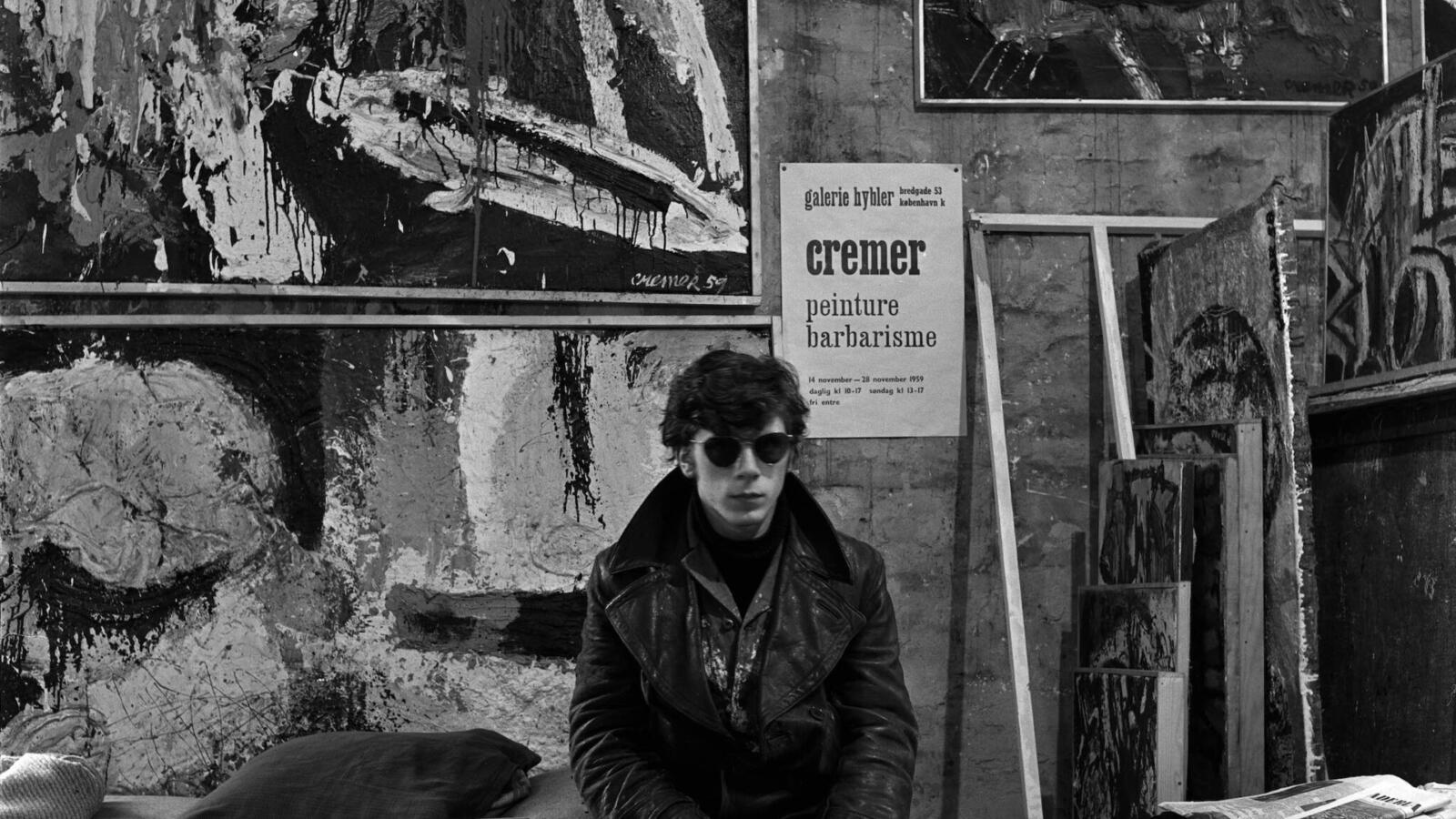
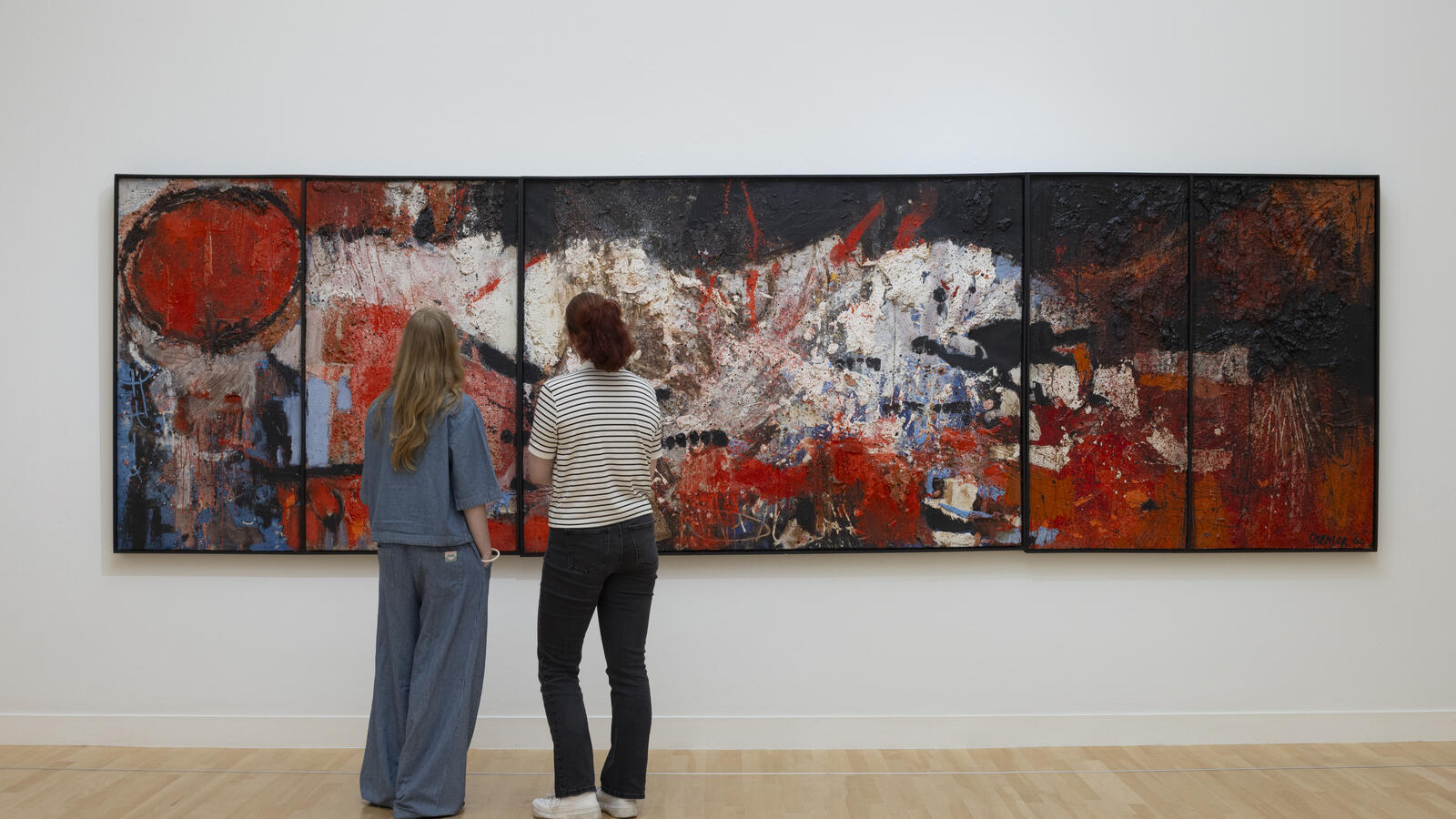
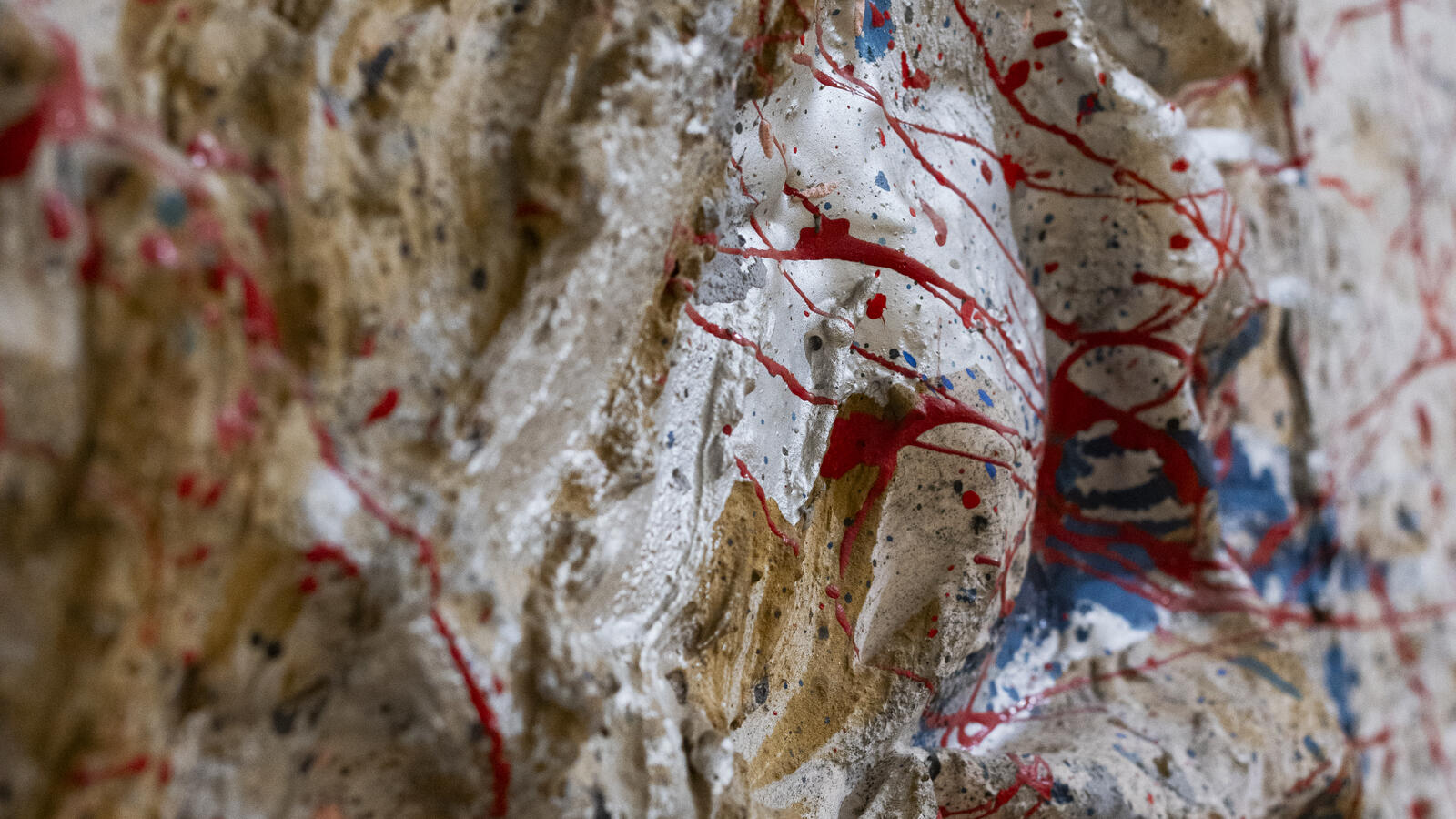
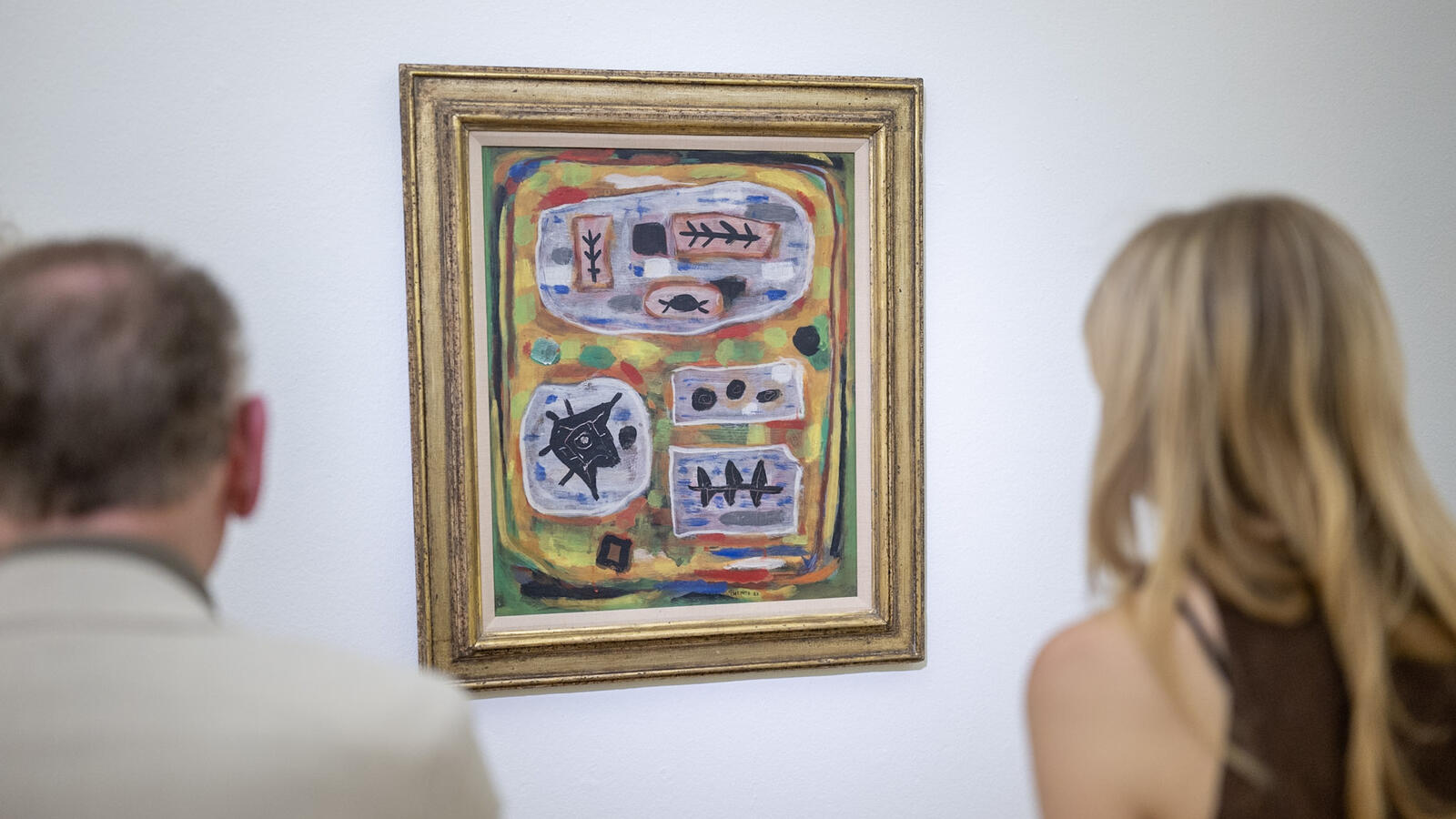
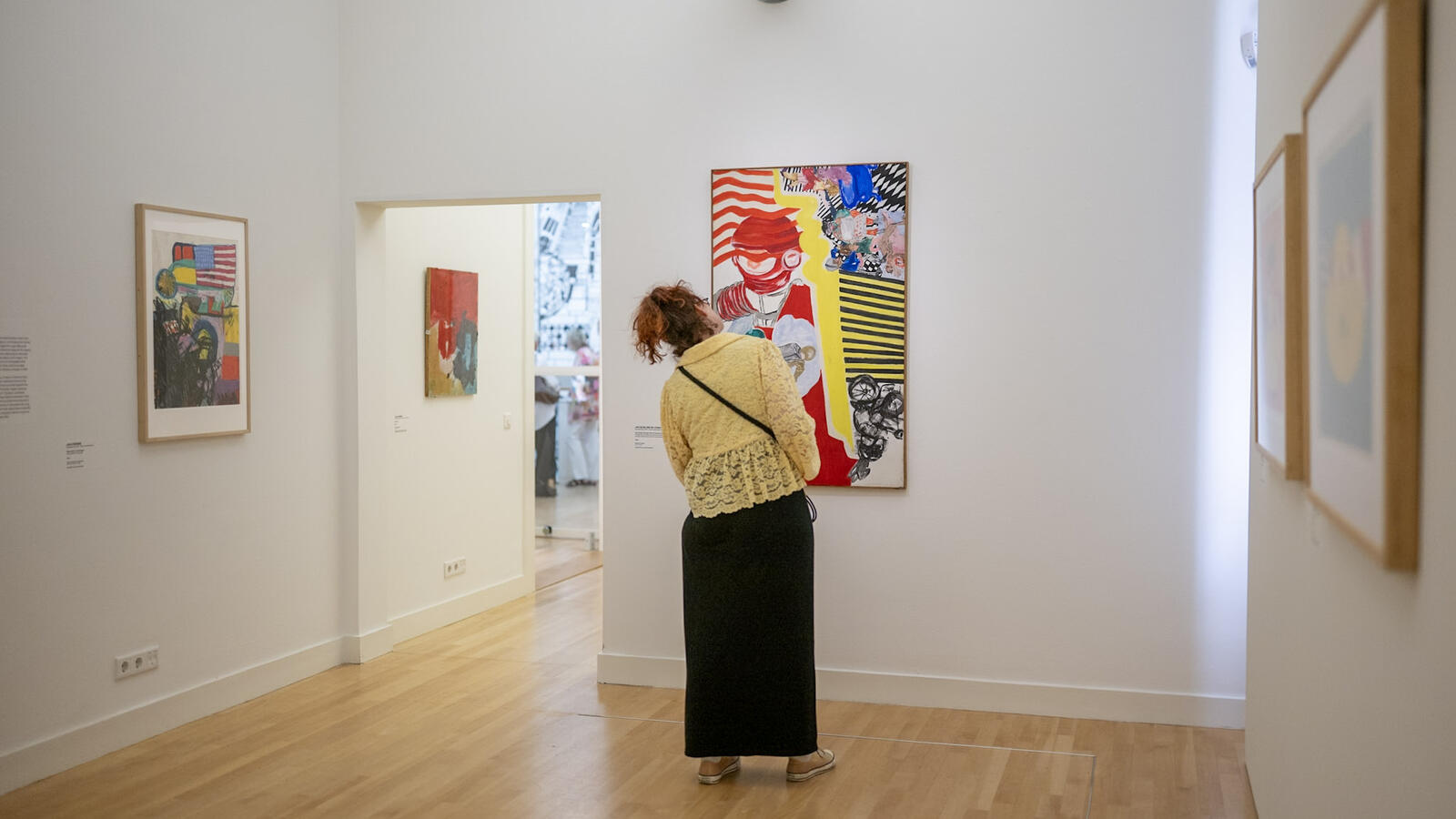
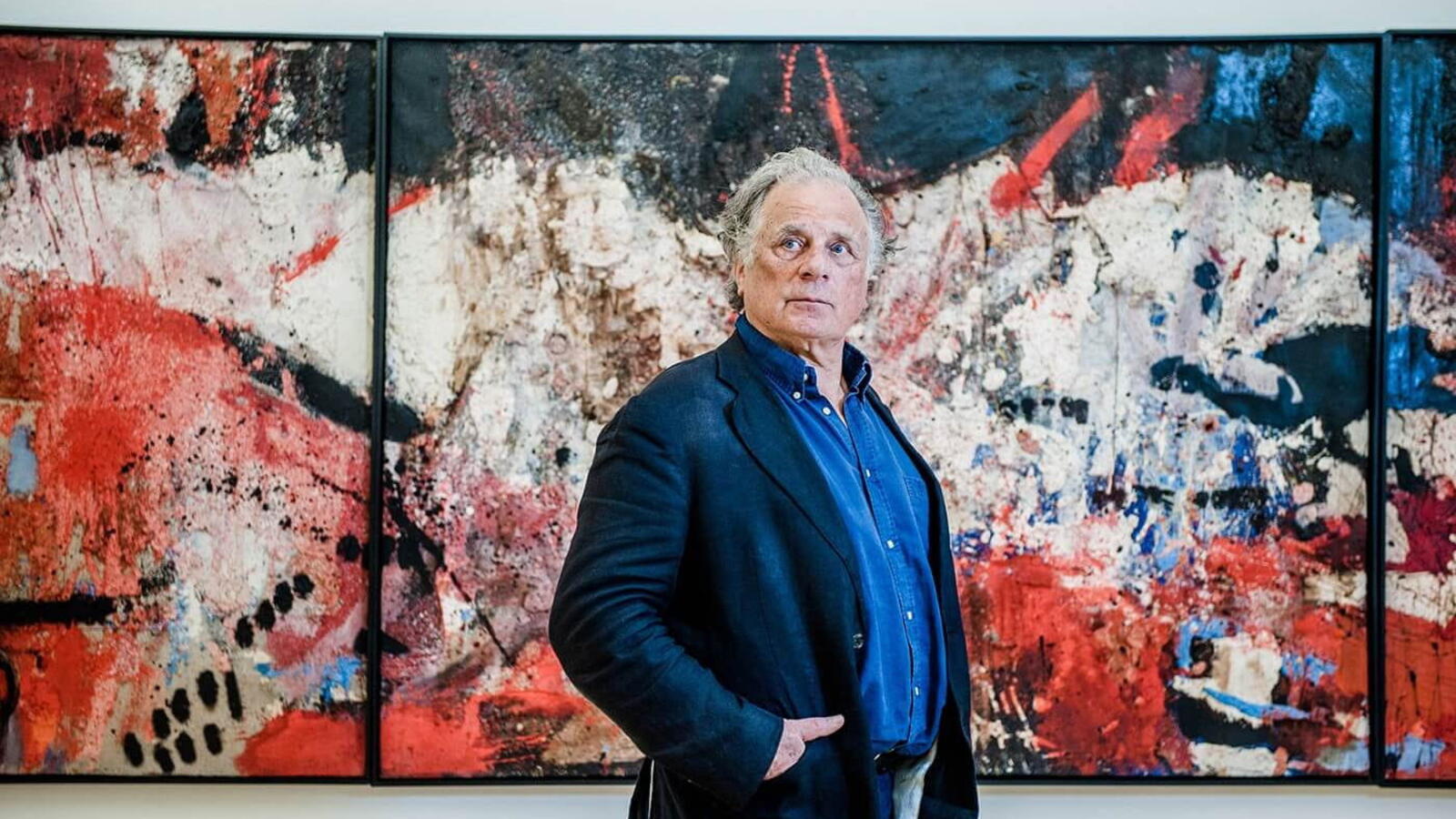
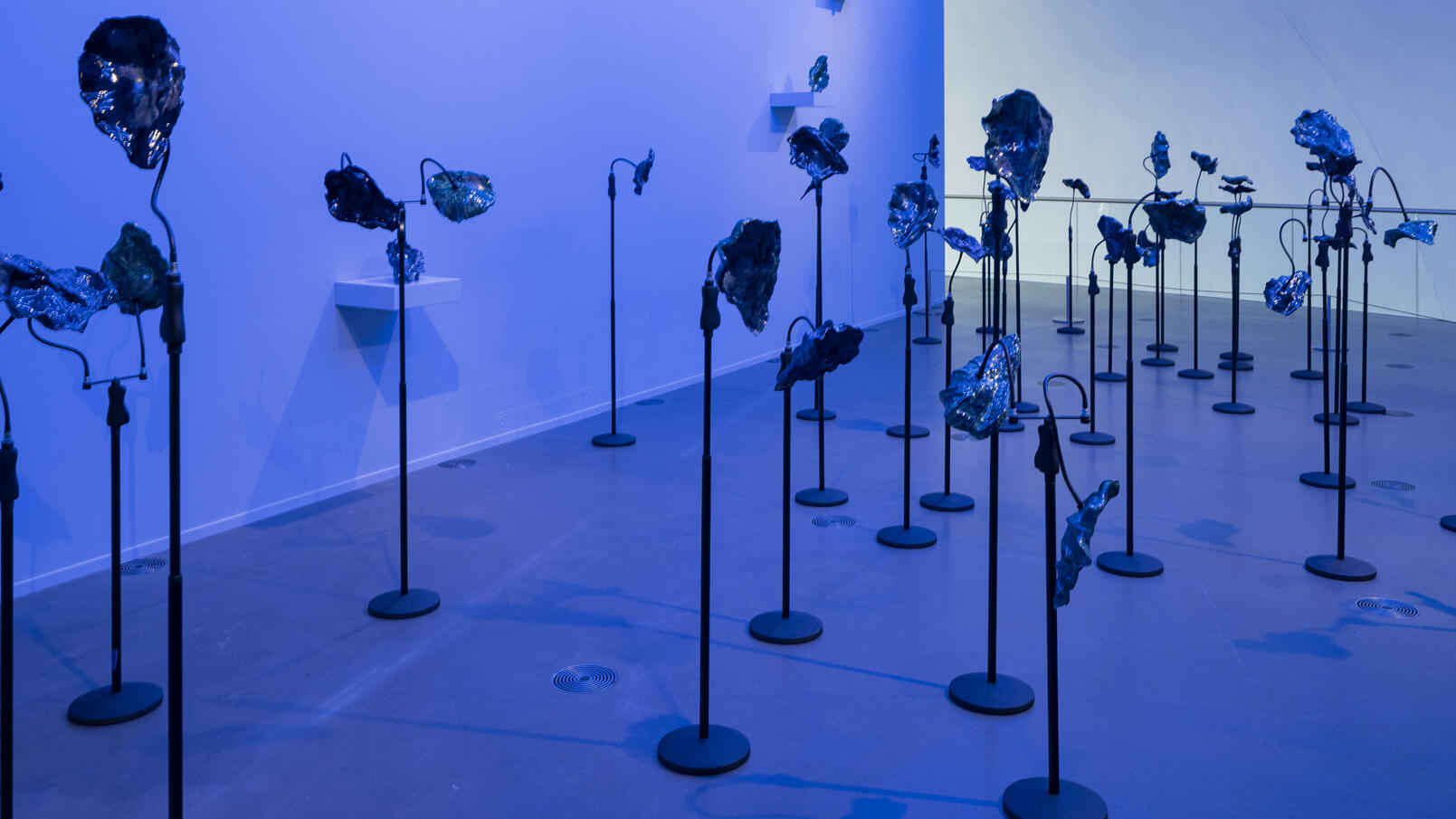
‘I chuck paint onto a canvas, I drip, splash, slash, kick. I fight with paint.’ With these words, Jan Cremer (Enschede, 1940 – Amsterdam, 2024) positioned himself as an artist in 1959. Cremer in Context: The Early Years focuses on Cremer’s position as a visual artist in the 1950s and 1960s, and on the relationship between his work as a painter and as a writer. It is the first retrospective exhibition since Cremer’s death in 2024.
A taste for provocation
From the very beginning, Cremer was uninhibited and striking in the pursuit of his ambitions. He was eager and fearless in promoting what he made. And he knew that what he said and wrote helped shape the way his work was received. At the age of twenty, he remarked: ‘I don’t paint according to an idea, because ideas are worthless. I just want to enjoy painting; after all, I’m just an ordinary boy, and all that nonsense about art and higher ideas can go to hell.’ In this way, Cremer presented both his painterly drive and his artistic identity to the world.
Cremer took a stand against the work of his contemporaries. He had ‘had enough of their sensitive compositions, their refined colour ranges’ and called it ‘all rubbish, aesthetics’. In 1964, his book I, Jan Cremer was published, firmly establishing his self-created image as the enfant terrible of Dutch art and literature. Yet he was close friends with many artists and writers, both in the Netherlands and abroad. He was very much aware of the latest artistic and literary developments of his time. But for Cremer, the only way to be part of them was to break away from them.
A new meaning
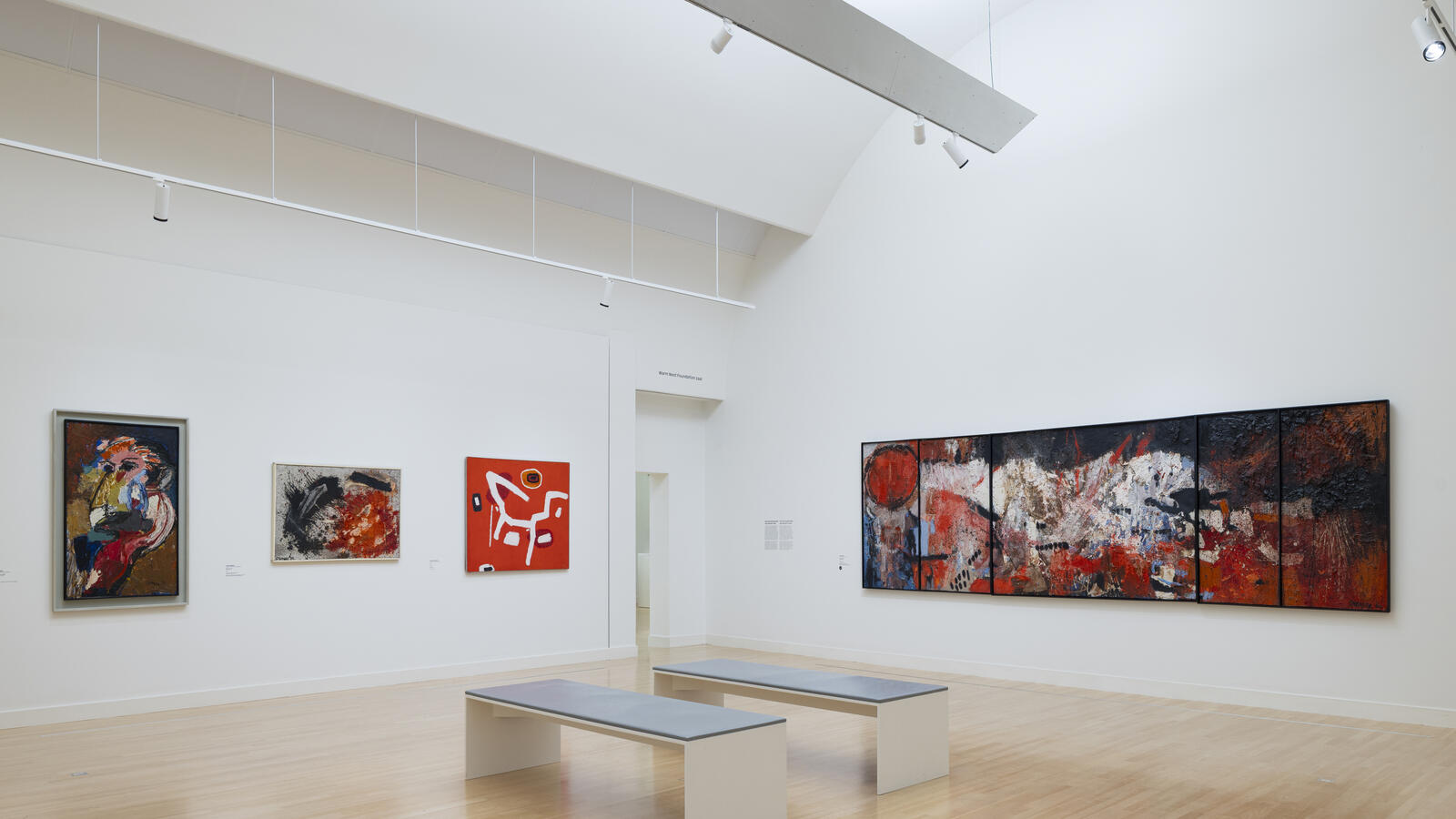
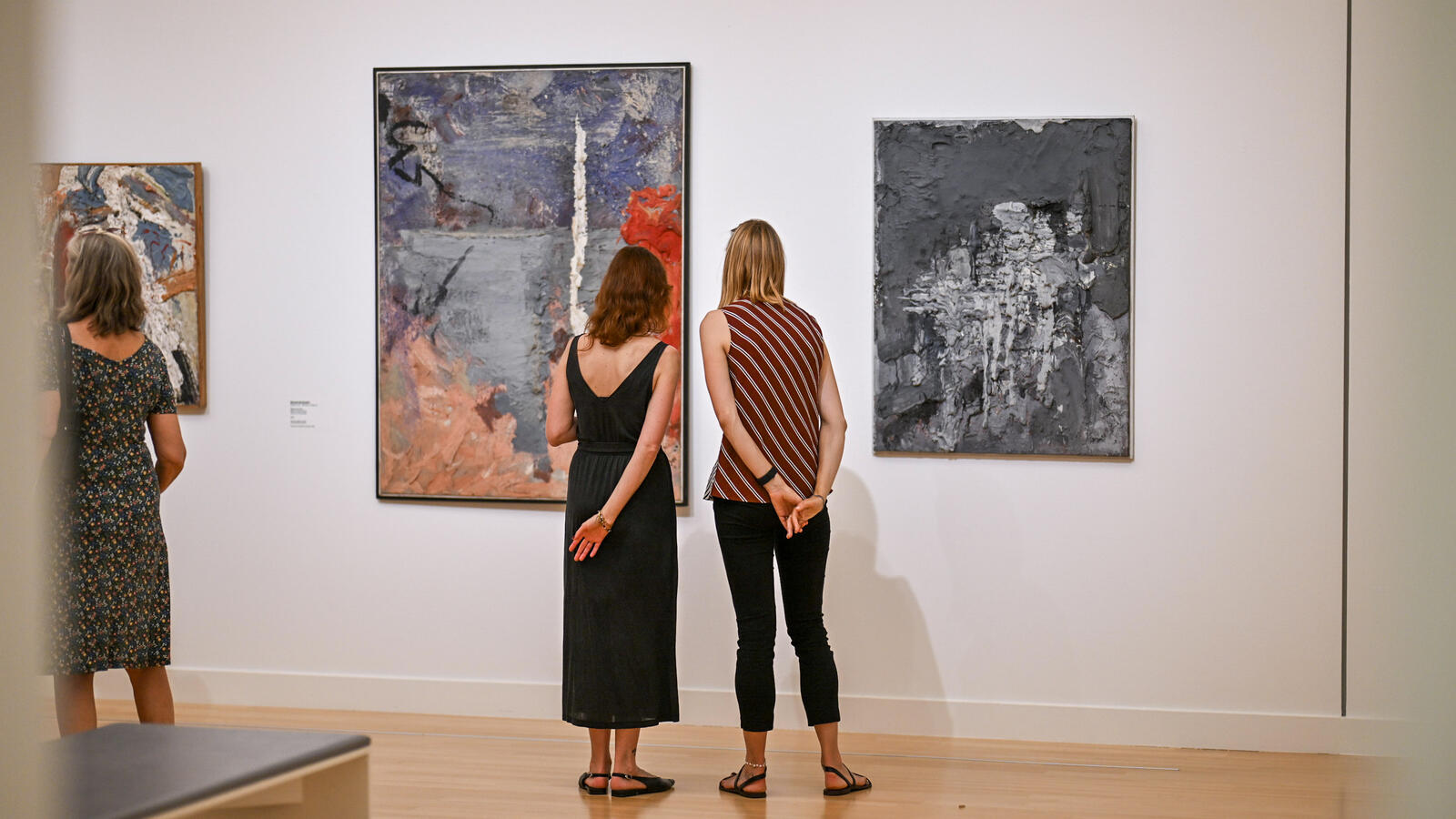
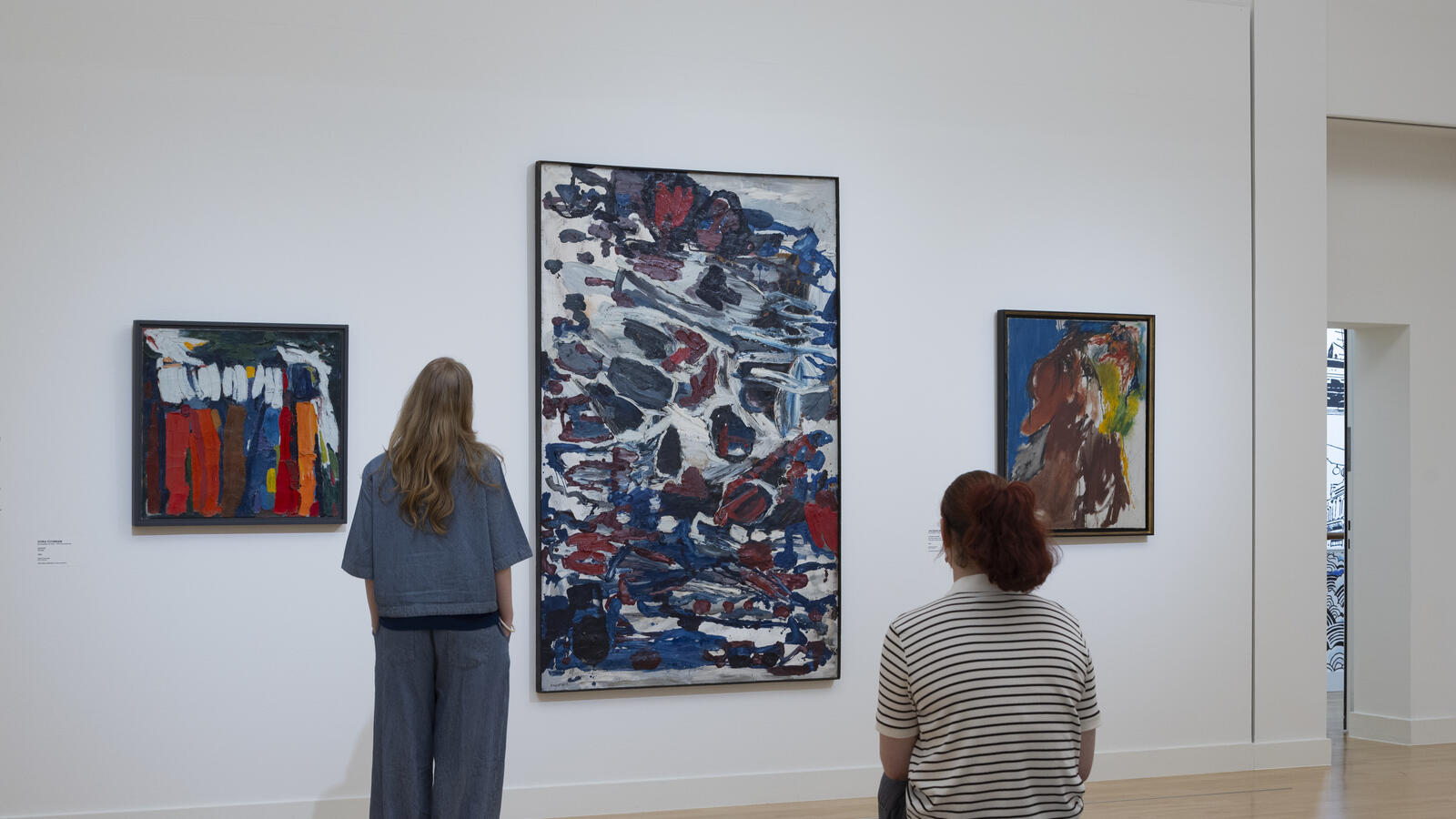
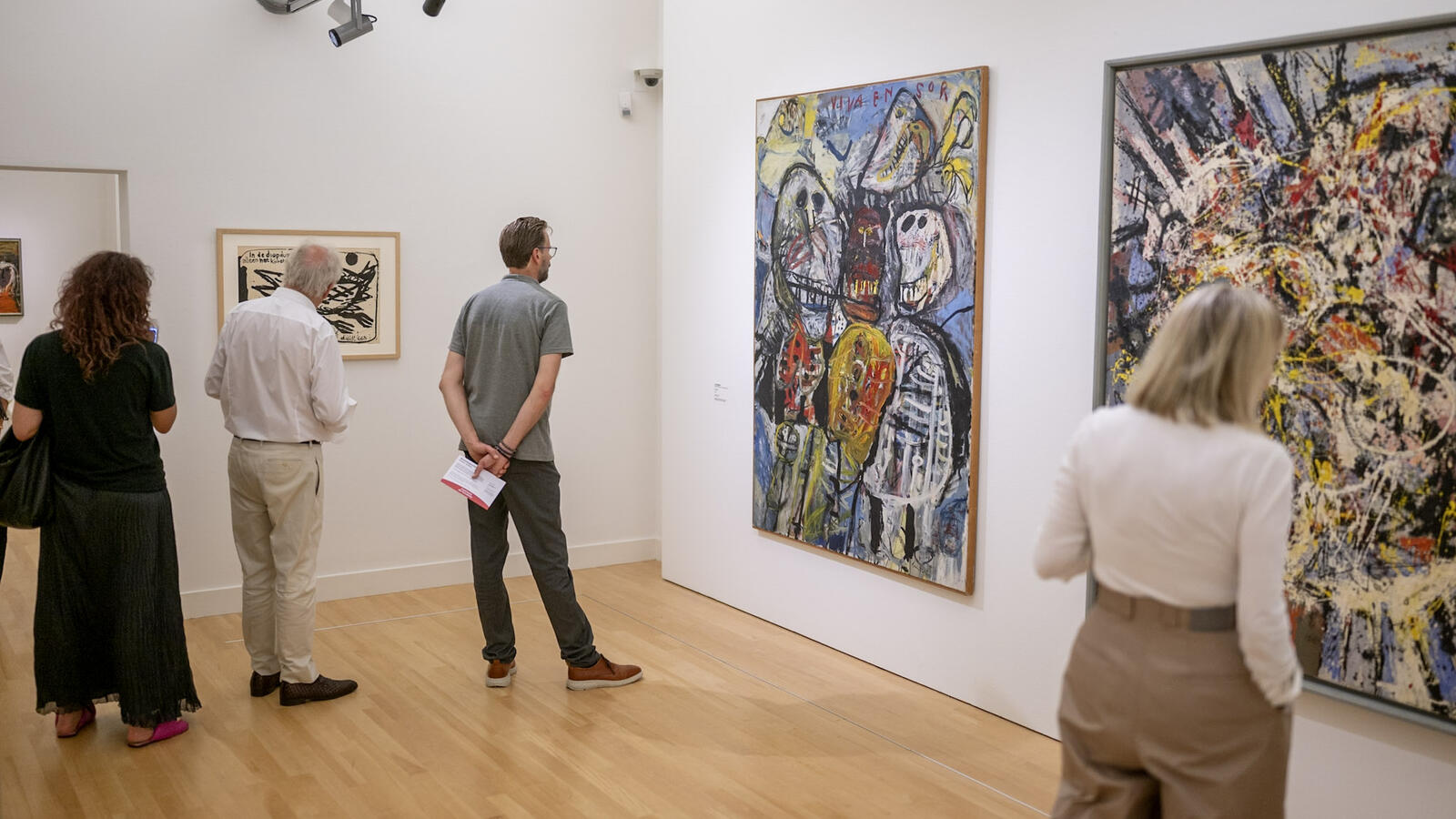
Cremer in Context: The Early Years focuses on Cremer’s position as a visual artist in the 1950s and 1960s, and on the relationship between his work as a painter and as a writer. His development is shown in dialogue with the art of his time: École de Paris, CoBrA, Pop Art, matter painting and Abstract Expressionism. At the centre is his peinture barbarisme, his own distinctive style. Surrounded by artists including Karel Appel, Armando, Bram Bogart, Lotti van der Gaag, Jacqueline de Jong and Dora Tuynman, Cremer’s position as a loner within the arts and as a pioneer of modern art takes on new meaning.
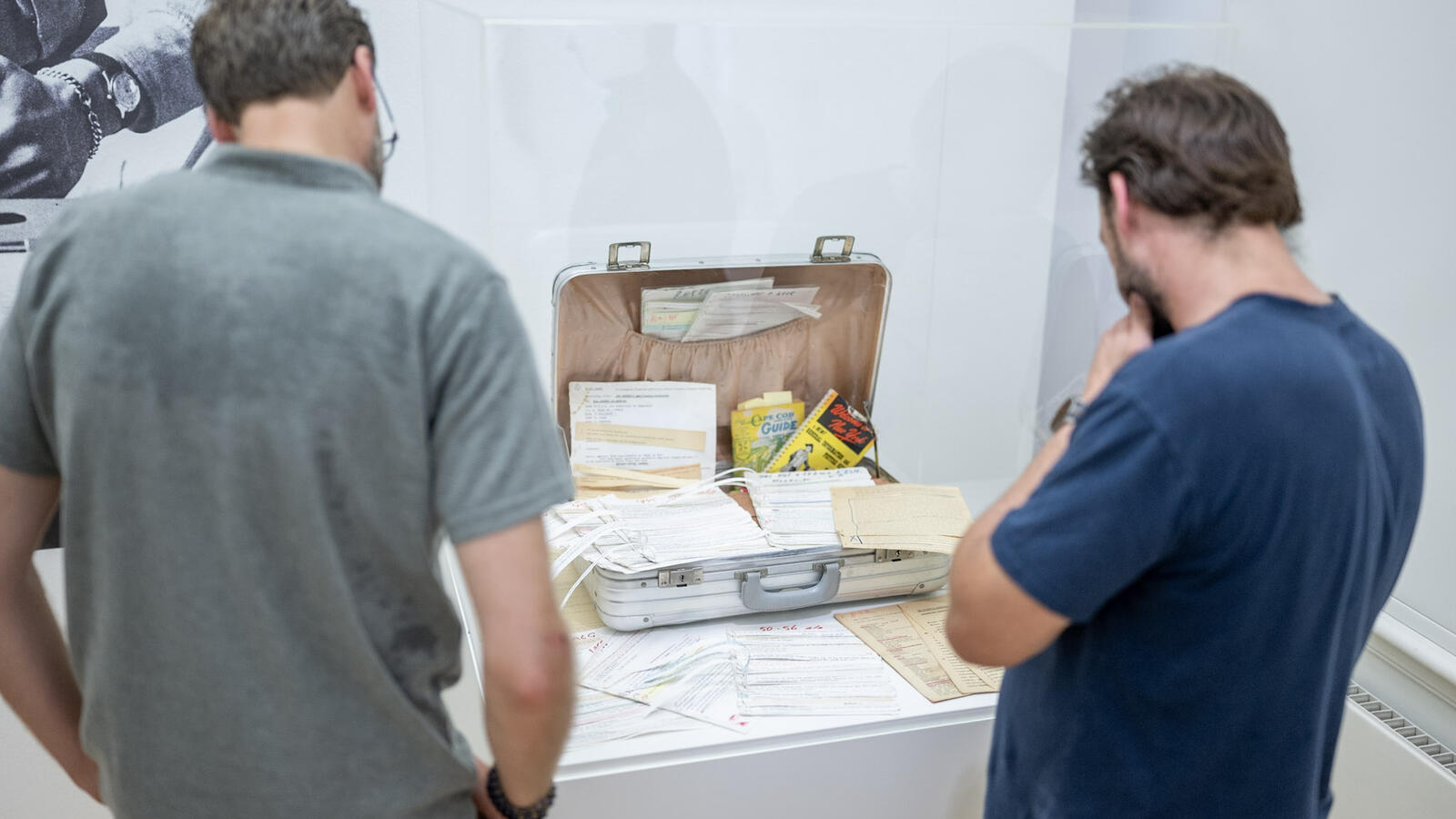
Cremer in Context: The Early Years is the first retrospective exhibition since Cremer’s death in 2024. Museum de Fundatie holds the largest museum collection of Cremer’s work in the Netherlands and is therefore pleased to present this homage. The works on display, more than fifty by Cremer and around thirty by his contemporaries, come from Cremer’s estate, from the collection of Museum de Fundatie and from various museum and private collections. In addition, around forty photographs from the Jan Cremer Photo Collection offer a special view of the young Cremer.
JAN CREMER, Karel Appel, Armando, Gustave Asselbergs, Roger Bissière, Bram Bogart, Eugène Brands, Lotti van der Gaag, Frieda Hunziker, Willem Hussem, Jacqueline de Jong, Lucebert, Jaap Nanninga, Dora Tuynman, Theo Wolvecamp.