A theatrical exhibition of Folkert de Jong’s Styrofoam sculptures.
Martin Luther disguised as a terrorist. Jesus and Mary in reversed roles. Queen Wilhelmina as a circus director. Snoop Dogg as a totem pole. Through distorted versions of historical figures, Folkert de Jong shows how history is made, how it could have unfolded differently, and how it continues to change. De Jong plays with history: he reverses roles, allows contemporary problems to surface in the past, and makes historical events unfold differently than we are accustomed to.
The Hero, the Villain, and the Truth is an initiative by curator and cultural entrepreneur Johan Idema, in collaboration with Folkert de Jong and exhibition producers Brandwacht & Meijer.
A theatrical performance featuring lighting and storytelling
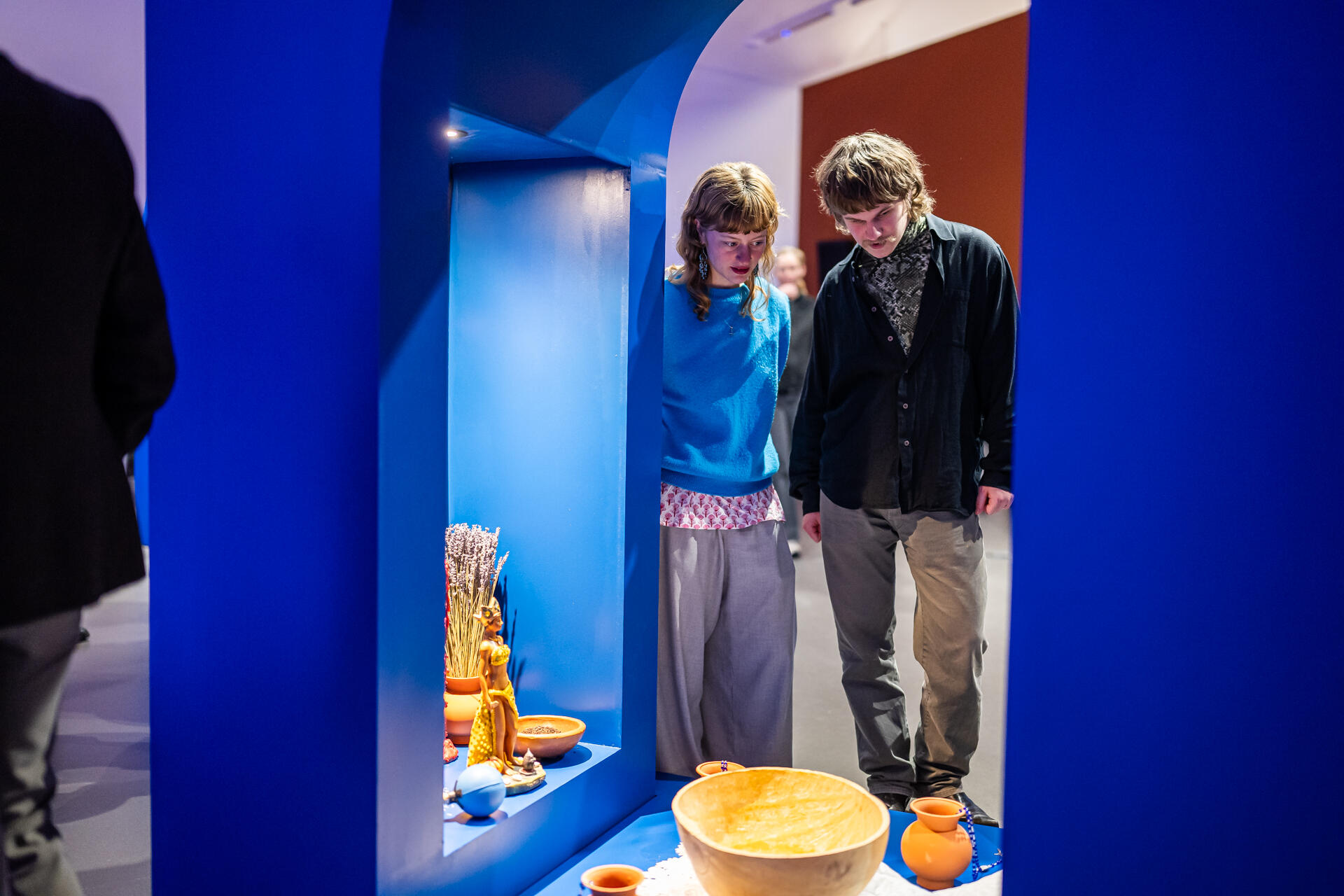
In the exhibition, De Jong’s sculptures are staged: thought-provoking audio stories and theatrical lighting imbue the sculptures with meaning and interpretation. The stories were written by authors and theater makers such as Elfie Tromp, Abdelkader Benali, Roziena Salihu, and Maxine Palit de Jongh. The theatrical performance allows the audience to understand and experience De Jong’s work more deeply.
The exhibition presents historical figures such as Governor Peter Minuit (as he “buys” Manhattan), Martin Luther (disguised as a terrorist), Jesus and Mary (in reversed roles), Queen Wilhelmina (as a circus director), Snoop Dogg (as a totem pole), and the Zeeland Girl. Together, the images tell a story about the history of our country—our commercial spirit, the role of religion, the position of women—and how this history has been written and is being rewritten. The exhibition constitutes a unique, creative, and visual history lesson, one that turns out to be as cheerful as it is grim. The artist plays with history: reversing roles, allowing contemporary problems to surface in the past, and making historical events unfold differently than we are accustomed to.
Current relevance
The Hero, the Villain, and the Truth shows how Folkert De Jong uses his art as a weapon to question history. “An innocent weapon,” he says, “because you’re just looking at it. But I want to show that history is not only static but also malleable. Roles can change over time.” The exhibition demonstrates how a different zeitgeist leads to a different history. This makes De Jong’s work and this exhibition timely and relevant, now that social issues such as racism, gender identity, and colonialism are thoroughly challenging the transmission of history.
About Folkert de Jong
Folkert de Jong (Alkmaar, 1972) is considered one of the most important living artists in the Netherlands. He studied at the Amsterdam School of the Arts and the Rijksakademie van beeldende kunsten. His work consists of life-size human figures made from insulation materials: polyurethane foam and Styrofoam. De Jong received the Prix de Rome and the Charlotte Köhler Prize and has gained international renown over the past twenty-five years with dozens of solo exhibitions in museums worldwide, from Milan and New York to Mexico City and Hong Kong. De Jong is celebrated for his virtuosity as a sculptor and his brilliant expression of human madness.